Present Joys

“We thank the Lord of heaven and earth
who hath preserved us from our birth
for present joys, for blessings past,
and for the hope of heaven at last.”

Tag films

18 posts between January 2011 and December 2013

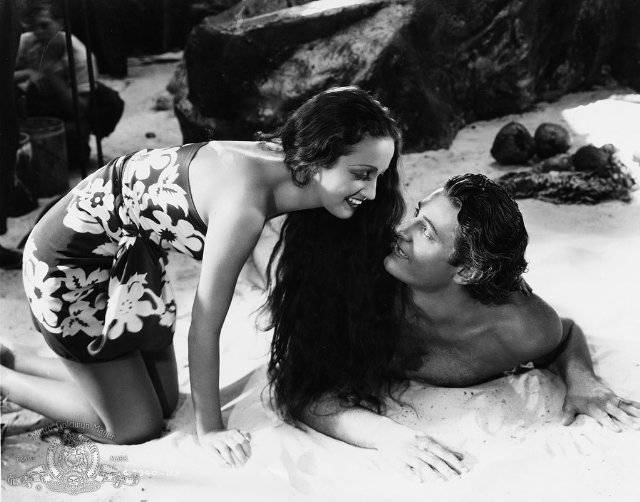
I just watched The Hurricane from 1937. I put this movie in the Netflix queue solely because it had Mary Astor in it. It looked pretty cheesy—and, certainly, the first 40 minutes or so were pretty slow and romance-focused, but once the plot got going, it became quite a great movie.

This movie’s lead characters are white people trying to be Pacific islanders, but even this isn’t as grating as you’d expect. I consider this a triumph made possible by great storytelling. The sometimes-cheesy lead characters are balanced by an all-star supporting cast, including Mary Astor, C. Aubrey Smith, Thomas Mitchell, Raymond Massey, and John Carradine (who had great facial hair in this movie).

The first hour of the film is spent telling a story about people who live on this island. The viewer is made to care about the goings-on in their lives. Then, suddenly, the hurricane appears and the story takes a dramatic turn. (I don’t think I’m spoiling anything by saying that.) The hurricane sequence itself, near the end of the film, is absolutely stunning. Really convincing, quality filmmaking, and emotional, too.

Highly, highly recommended.

On tuesday night, I watched the 1969 horror film What Ever Happened to Aunt Alice?, starring Geraldine Page and Ruth Gordon. Page played a cruel, spoiled widow, in need of cash, who hired housekeepers only to murder them and steal their money. Ruth Gordon played a housekeeper of Page’s, who went undercover to find out about the murders. I hate a lot about 60s/70s movies—the costumes, the picture quality, the editing, the general vibe—it’s all pretty unappealing. But the acting in this movie was so fantastic I forgot about all the unappealing stuff. Ruth Gordon’s character, especially, was fantastic. She reminded me a lot of my neighbor Donna. The movie’s plot was seriously scary but tastefully done and really enjoyable.

On friday, I watched one of Hitchcock’s pre-Hollywood films, from 1932, Number Seventeen. Except for a train-chase scene at the end, the entire film was shot on one set. The editing was clumsy (lots of sloppy jump cuts), and the story itself had some continuity problems. Leon Lion played a funny old tramp, but characters like that always kinda creep me out. An altogether disappointing movie!

On saturday, I watched a 1933 film The Kennel Murder Case. This was glorious. Even if this movie hadn’t had any plot, it would’ve been worth watching solely for the suits. I could go on and on about men’s suits in the 30s. William Powell, who played the protagonist, Philo Vance, looked totally killer. Suits or not, this was a great little murder mystery. Really inventive camera work: sweeping crane shots of city blocks, split-screen phone call scenes, and peeking-through-the-keyhole shots. The cinematography made this film pleasant to watch. My only complaint is that I’d have liked to see more of Mary Astor. Oh, and the typography in the title sequence was awesome. You can watch the whole film on YouTube. I recommend it.

I watched Robert Aldrich’s 1955 film The Big Knife last night. A stage play adapted for the screen—but only very slightly adapted—all the movie’s action took place on one set. The plot of the film followed a depressed, philandering Hollywood actor (Jack Palance) locked into a bad acting contract. Speaking of Palance: he had a very funny mid-50s movie-star wardrobe, including double-pleated trousers with a half-elasticized waistband he put on after exercising.

The film itself was pretty macabre, in a reserved, stage-play sort of way. Though this film was somewhat dull, it was pretty interesting A nice antidote to the Capra film from a few nights ago.

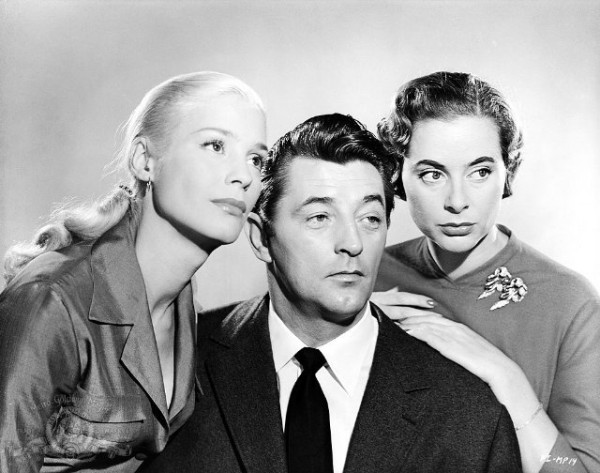
I watched this 1956 film Foreign Intrigue tonight, starring Robert Mitchum and a bunch of people I didn’t recognize. The soundtrack was awful—very 1950s. Robert Mitchum pretty much only wore one suit during the whole film and there was not a lot to get excited about in the way of sartorialism. Besides that, it was a cute little film, with nice visual texture—despite being in 1950s color! Geneviève Page, who played the glamorous antagonist, was especially good.

Black Legion, from 1937. I watched this movie a couple nights ago. A very young Humphrey Bogart plays an American factory worker whose work is overshadowed by a Polish immigrant’s. This prompts Bogey to join the Black Legion, a KKK-like mob that ends up pretty much destroying his family, not to mention the community. The ending is unsatisfying and lame, but not enough so to overshadow the rest of the film.

The movie is overdramatized even by 1930s standards, but it makes for fun watching. I really liked this movie because it featured quite a lot of lower-class fashions. I’m used to seeing Bogart in suits, so it was great to see him in a belted factory jumpsuit and a felt mechanic’s beanie. His off-duty leather jacket was extremely nice, too.